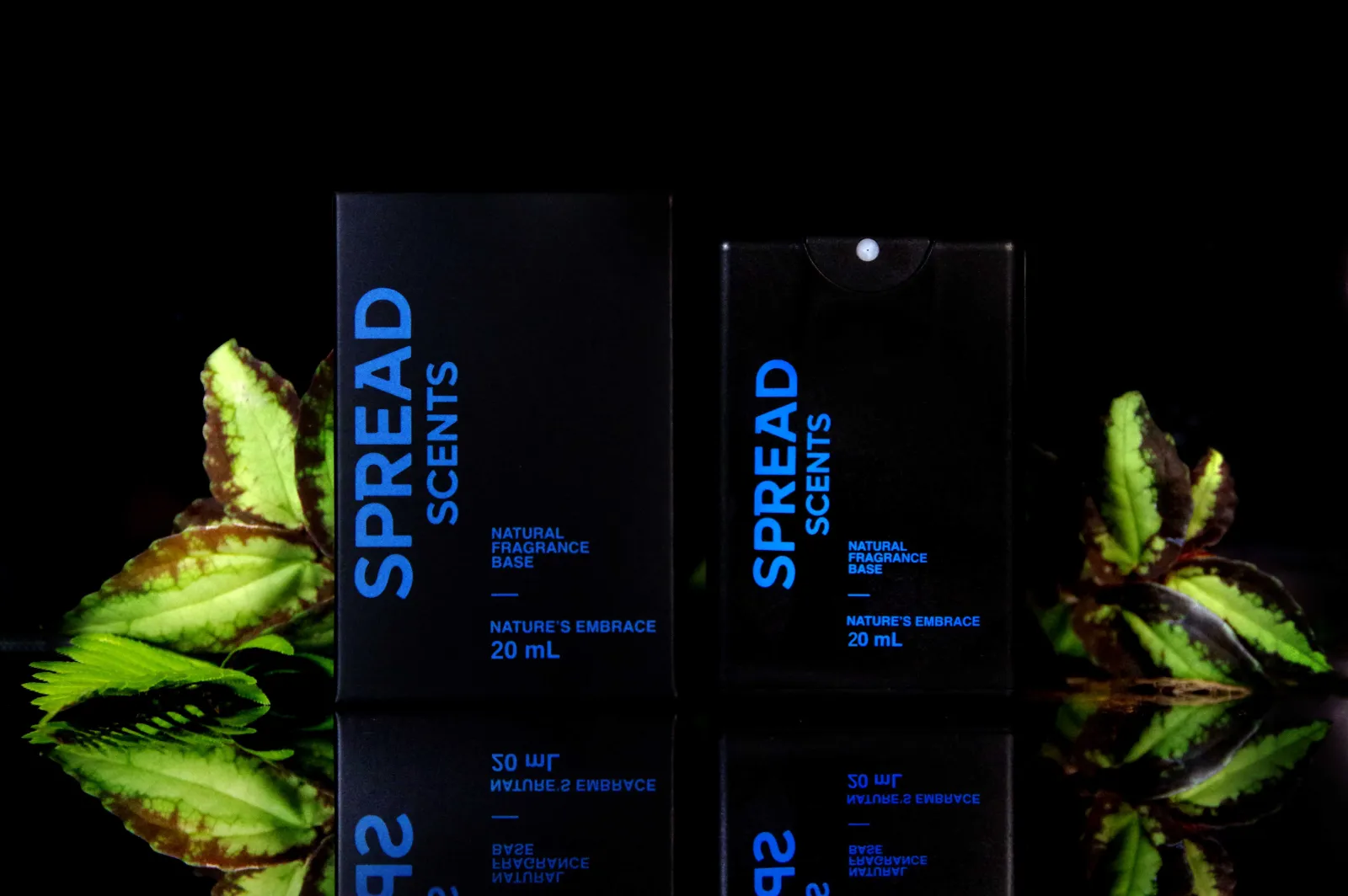
You don't have to choose between the perfume you've worn for years and a natural scent oil. Layered well, a pocket scent oil sits underneath an everyday fragrance the way a base layer sits under a jacket — it deepens what's already there, softens the edges, and keeps something of you on the skin after the louder scent has faded. Here's how to do it without turning your wrists into a fragrance argument.
Why oil first, always
The order isn't a style preference; it's physics. A jojoba-based oil settles into the skin and stays put, while an alcohol-based spray needs a surface to flash off from. Apply the oil first and the alcohol spray lands over a smooth, slightly conditioned base; apply it second and you're pressing oil over the top of a fragrance that's still developing, muddying both. So the rule is one line long: oil on skin first, everyday fragrance over it, a few minutes apart.
The basic technique
- Start light. One mist of the oil on the pulse points you always use — wrists, base of the throat.
- Let it settle. Give it two or three minutes. Jojoba absorbs cleanly; the skin should feel comfortable, not slick.
- Spray your usual fragrance over or beside it. Directly over deepens the blend; on a neighbouring point (oil on the throat, spray on the chest) keeps the two more distinct.
- Judge it at the thirty-minute mark, not the first. The alcohol fragrance will dominate the opening; the pairing shows itself once the top notes settle.
A note on skin: Essential oils are natural, but natural doesn't mean reaction-free. Patch test on your inner arm before first use, and skip broken or irritated skin.
Pairing by scent family
The reliable way to pair is to match one note the two fragrances share, or to pick an oil that fills a gap the other scent leaves open:
- Citrus Cedar under anything woody or aromatic — the cedar base reinforces the dry-down, and the citrus top disappears politely under the other scent's opening.
- Nature's Embrace under green or fresh fragrances, where its earthy character adds ground the fresh scent usually lacks.
- Rose Gold under florals and soft ambers — rose is perfumery's most-layered note for a reason.
- Vibrant Violet under powdery or musky scents, where the violet reads as a lifted, slightly retro accent.
One honest caveat: layering is taste, not law. These pairings are starting points; your skin and your everyday fragrance will have their own opinion, and a wrist test settles it faster than any guide.
When to skip the layer
Some fragrances are complete arguments on their own — dense ambers, heavy ouds, anything already polarizing at one spray. Layering under those adds noise, not depth. Save the oil-first trick for fragrances with room in them: colognes, fresh scents, soft florals, quiet woods. And on no-fragrance days, the oil alone is the move — it wears close enough for offices and airplanes where a full spray would be too much.
The maintenance advantage
Here's the part regular layerers appreciate most: the oil is the format you can top up anywhere. The 20 mL case rides in a pocket, and a single mist at 3 p.m. quietly restores the base of the morning's combination without re-spraying the loud half. If you're new to applying oils, our guide to applying a scent balm and scent oil so it lasts covers the technique in detail.
Start simple
Pick the one oil that matches your everyday fragrance's family, wear the pair for a week, and adjust. If you're not sure which of the five scents that is, the Find Your Scent quiz narrows it down in about a minute — or browse all scents and read the note pyramids side by side.
Written by Spread Scents